AirDrink banner
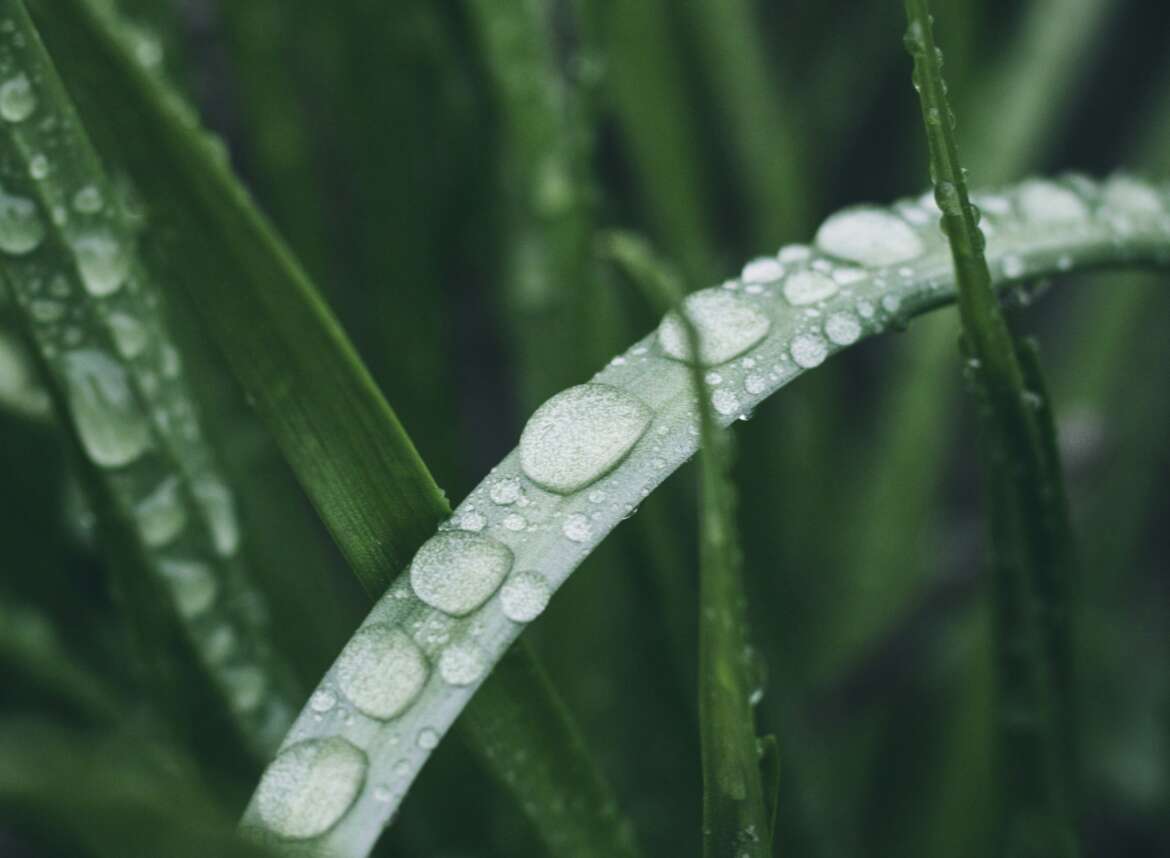
Drops of water on a leaf, the humidity of the air

Chlordane in the Antilles: what water to drink in Guadeloupe and Martinique?

Chlordane in the Antilles: what water to drink in Guadeloupe and Martinique?

Used in banana plantations in Guadeloupe and Martinique from 1972 to 1993, chlordecone remains present in the soil and waters of the Antilles for decades. Should we be concerned about the water we drink? Here’s what the health authorities say, and the solutions to ensure safe water on a daily basis.

Chlordane, a very persistent pesticide

Chlordane is an insecticide used for more than twenty years to control the banana weevil. Banned since 1993, it degrades extremely slowly: it permanently contaminates soils, rivers, aquifers and the marine environment near the coast.

According to Santé publique France (Kannari study, 2013-2014), chlordane is detected in the blood of % More than 90 adults from Guadeloupe and Martinique. The prevalence has been decreasing since 2003 for the majority of the population, but not for the most exposed individuals.

Where does the exhibition come from?

According to the Anses, Food is the main route of exposure Fish and crustaceans caught in the contaminated area, freshwater crustaceans, eggs from family poultry farms, root vegetables grown in contaminated soil. Products from informal circuits (self-production, donations, roadside sales, recreational fishing) are more exposed than those from controlled circuits. The JAFA program offers free soil and food analyses.

And the tap water?

The water distributed by the public network is treated, notably with activated carbon in the affected plants, and monitored by the ARS. However, chlordane may be present in water from springs, rivers or untreated reservoirs. It is therefore advisable not to drink water from a spring or ravine without proper treatment.

In the Antilles, another difficulty is added: the water cuts and the «water towers», which are common in Guadeloupe, which force many households to store water or buy water packs.

What solutions for safe water?

1. Filter the tap water with an osmoseur

To go beyond the treatment of the network, a sink-mounted osmoseur retains most of the dissolved contaminants: pesticides, PFASs, nitrates, heavy metals. See, for example, the’Osmoseur Pure Balance, Without electricity, or the Cross 90 Balance.

2. Treating the water from a well or a borehole

The water from a private well is not controlled by the ARS: have it analyzed, then treat it with an appropriate system, such as the’Osmoseur Slim 4″ Pro, or its version special sour water for wells near the sea.

3. Producing its own water from air

An atmospheric water generator does not draw its water from the ground or from rivers: it condenses the moisture in the air, then filters it, purifies it and mineralizes it. According to the Anses, no contamination of the air by chlordane has been detected. This is therefore water that is independent of soil pollution and remains available during network outages.

The Antillean climate, warm and humid all year round, is ideal: it is under these conditions that a generator produces the most water. C2 suitable for one person or a couple, the C3 to a small family, the C8 in a large family or an office.

👉 Discover our Special offer for Guadeloupe on the C2.

In summary

  • Chlordane mainly affects food from the contaminated areas.
  • Tap water is treated and controlled; avoid untreated spring or river water.
  • Osmosis system, drilling treatment or atmospheric water generator: several solutions exist to drink safe water, even during outages.

Sources: Anses, Public Health France. Any questions? Contact us.

📬 Receive our new articles

Water quality, practical tips, and new features AirDrink: an email for every new article.

Any questions? Any free advice?

Our experts help you choose the solution that best suits your water and your needs.
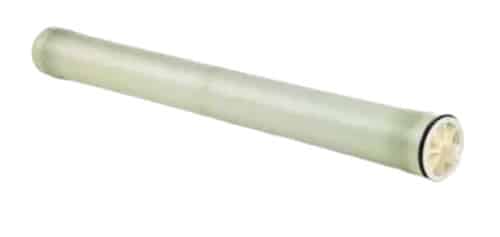
Slightly alkaline water membrane 2400 GPD for Slim 4″ Pro osmosis system

Well or borehole water: should it be analyzed before drinking it?

Well or borehole water: should it be analyzed before drinking it?

A well or a borehole in the garden is free and available water… but not necessarily potable. Unlike tap water, it is not treated. not controlled by the ARS It is up to the owner to ensure its quality. Here’s what you need to know before drinking it.

Uncontrolled water

Groundwater may appear clear but actually contains bacteria, nitrates or pesticides from neighboring crops, metals, PFASs or, near the coast, salt. Its quality can also vary depending on the seasons and rainfall.

What the regulations say

  • Declaration at the town hall Any well or borehole for domestic use must be declared to the mayor (Cerfa form 13837), under Article L. 2224-9 of the General Code of Territorial Collectivities.
  • Analyze whether the water is drunk : when the water is intended for human consumption, the declaration must be accompanied by a P1 type analysis, performed by a laboratory approved by the Ministry responsible for health.
  • Follow-up : An analysis does not guarantee permanent potability. The ARS recommend at least one analysis per year.

Which parameters should be analyzed?

  • Bacteriology : E. coli, enterococci… the most immediate risk to health;
  • Nitrates and pesticides, Especially in agricultural areas;
  • Metals (iron, manganese, arsenic…) ;
  • PFAS, If your sector is affected by known pollution;
  • Conductivity and chlorides : salinity indicators, to be monitored near the sea;
  • Turbidity (turbid water, sediment).

The nearest accredited laboratory can advise you on the appropriate «pack» of tests based on your region.

How to treat the water from a well?

The treatment depends on the results of the analysis, but it generally follows three steps:

  1. Remove the sediments : one 20″ filter holder with a sediment cartridge 25 microns protects the installation.
  2. Purifier : a high-speed osmoseur like the’Osmoseur Slim 4″ Pro eliminates bacteria, viruses, nitrates, pesticides and PFAS.
  3. Case of salty water Near the coast, the’Osmoseur Slim 4″ Pro special for muddy water, or even the version sea water, Remove the salt.

After treatment, a new analysis allows to verify that the water is indeed compliant.

No drilling? Produce your own water from air

If you do not have a well or if the aquifer is too polluted, a atmospheric water generator produces pure water from the moisture in the air, without depending on the underground.

In summary

  • The water from a well or a borehole is not tested: have it analyzed before drinking it, and then at least once a year.
  • Declare your well at the town hall and attach a P1 analysis if the water is drunk.
  • Sediment filtration + reverse osmosis: the safest combination.

Send us your analysis results: we will advise you free of charge on the appropriate treatment. Contact us.

📬 Receive our new articles

Water quality, practical tips, and new features AirDrink: an email for every new article.

Any questions? Any free advice?

Our experts help you choose the solution that best suits your water and your needs.
Pure water poured into a glass

PFAS in tap water: what changes in 2026 and how to protect yourself

PFAS in tap water: what changes in 2026 and how to protect yourself

PFAS, nicknamed «eternal pollutants», are now part of the official controls on tap water in France. What does the new rule say, how do you know if your water is affected, and what solutions are there for removing them from your home? Here’s the essential information.

What are PFASs?

PFAS (per- and polyfluoroalkylated substances) form a family of several thousand chemical compounds used since the 1950s: non-stick cookware, waterproof textiles, food packaging, fire-resistant foams, industry… Their carbon-fluorine bond is one of the strongest in chemistry: they hardly degrade in the environment, hence their nickname of «eternal pollutants».

They are found in soils, rivers, aquifers… and therefore sometimes in water intended for consumption. Some PFASs are recognized as being of concern to health, which explains the strengthening of regulations.

What has changed since January 1, 2026

Pursuant to the European directive on drinking water, PFAS have been included in the sanitary control of tap water since 2009. January 1st, 2026. The quality limit is set at 0.1 µg/L for the sum of 20 PFASs in the water distributed.

  • The Regional Health Agencies (ARS) they monitor the water at regular intervals and publish the results.
  • In the event of an exceedance, the community or the network operator must restore the water quality, under the supervision of the ARS.
  • The private wells and boreholes What is not covered by this control is the owner’s responsibility to have their water tested.

Note: The TFA (trifluoroacetic acid), a very short-chain PFAS often cited in the news, is not included in the list of the 20 PFAS in the regulatory sum.

How can I know the quality of the water in my municipality?

The results of the health inspection are public. You can consult them by commune on the website of the Ministry of Health (sante.fr – Quality of drinking water), on your ARS website or on your water bill, which includes an annual summary. In France, tap water remains one of the most controlled foods; but depending on your region, you may wish to go further.

Filtering PFAS at home: what solutions?

Not all filtration solutions are equal when it comes to PFAS:

  • Simple pitchers and filters They mainly improve the taste (chlorine) and have only a limited effect on PFAS.
  • Activated charcoal in blocks It retains a portion of the PFASs, especially the long-chain molecules, provided that the cartridges are changed regularly.
  • Reverse osmosis Its ultra-fine membrane allows water molecules to pass through and retains most of the dissolved contaminants: PFASs, pesticides, nitrates, heavy metals. This is today’s most comprehensive household solution.

Our osmosis systems are installed under the sink and provide filtered water on demand:

  • Pure Balance Eco-friendly, without electricity, ideal for starting up;
  • Robust Mini : Pure water continuously, without a tank;
  • Cross 90 Balance The high-end model, with remineralization and indicator lights for changing filters.

For water from a well or a borehole that is not controlled by the ARS, the’Osmoseur Slim 4″ Pro Handles large volumes.

And the water produced from the air?

One atmospheric water generator It draws its water neither from the network nor from the aquifers: it condenses the moisture from the air, then filters and purifies it. It is a source of water independent of soil and river pollution.

In summary

  • From 2026, the amount of 20 PFAS in tap water must not exceed 0.1 µg/L.
  • The results for your municipality are accessible online.
  • To reduce your exposure at home, reverse osmosis with mineralization is the most effective solution if you do not have a water cut.

Any questions about the solution suitable for your water? Contact us, We advise you free of charge. For more information: filtering the tap water and compare our osmoseurs.

📬 Receive our new articles

Water quality, practical tips, and new features AirDrink: an email for every new article.

Any questions? Any free advice?

Our experts help you choose the solution that best suits your water and your needs.

Do you need more information?

Contact us at 04 42 18 22 35

Contact us

14 Chemin de la Passerelle
13720 La Bouilladisse

Villagers from Atchavé (Togo) around the C8 atmospheric water generator offered by AirLifeTogo · Atchavé

HUMANITARIAN ENGAGEMENT

AirLife Association

Our humanitarian projects

Emanation of AirDrink, the association AirLife It was created by its founders to bring clean drinking water where it is lacking, thanks to atmospheric water generators.

In Togo, one C8 offered to the health center in Atchavé produces more than 20 liters of pure water per day. airlife-asso.org →

AirDrink © 2026. All rights reserved.